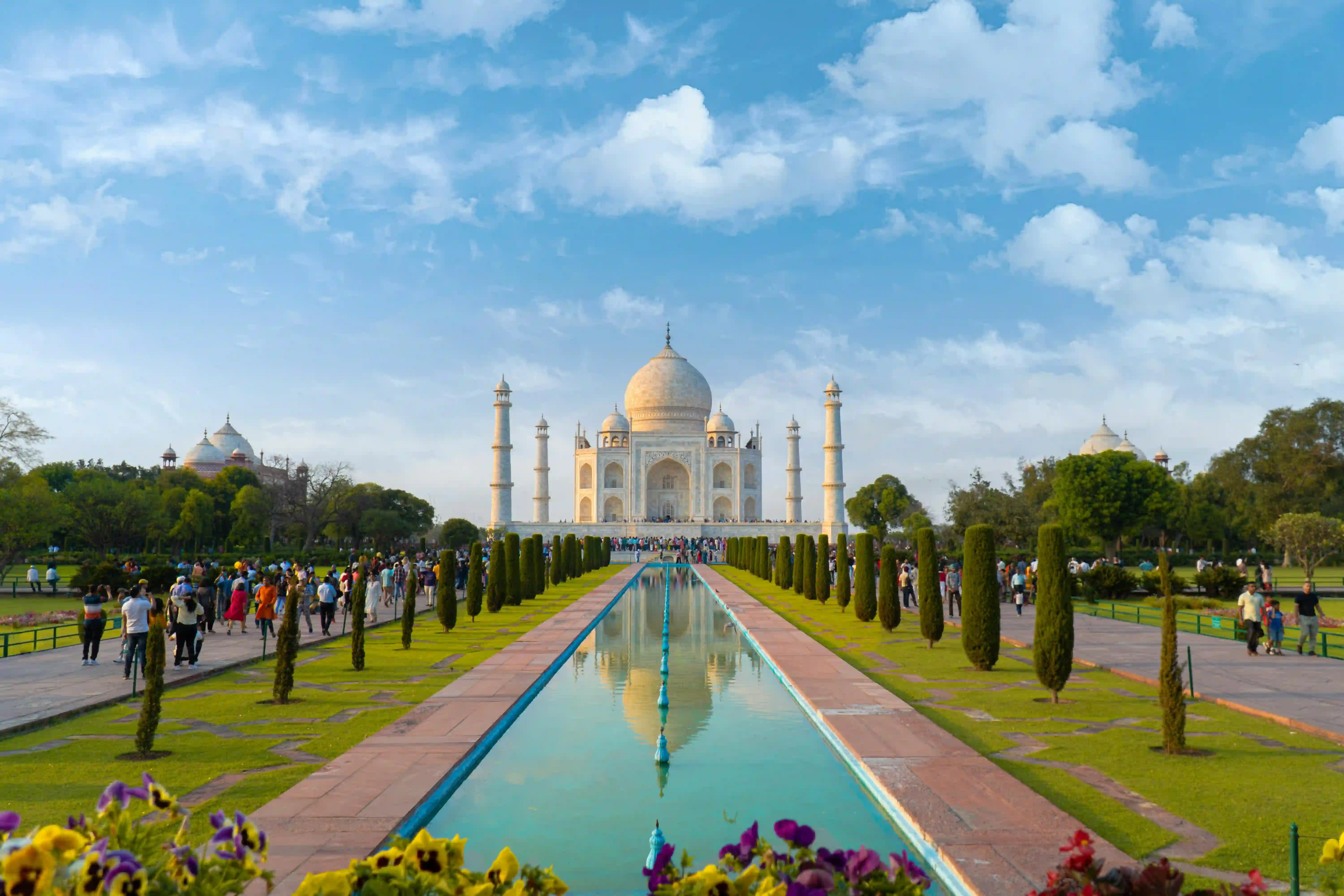
Visiting the Taj Mahal is one of the most unforgettable experiences for any traveler. Its breathtaking architecture, peaceful surroundings, and deeply emotional history attract millions every year. If this is your first time planning a trip, then this detailed guide on Taj Mahal Tour for First-Time Visitors will help you understand every step—from preparing your visit to exploring each part of the monument. This article has been written to help beginners avoid confusion, enjoy smooth travel, and experience the Taj Mahal the way it was meant to be experienced: slowly, emotionally, and with full admiration.
The Taj Mahal is more than a building. It is the physical symbol of love, grief, devotion, and ultimate craftsmanship. Built by Emperor Shah Jahan in memory of his beloved wife Mumtaz Mahal, it stands today as one of the most perfect structures ever created. The white marble used in the monument changes color throughout the day, glowing golden at sunrise, ivory-white during the afternoon, and silver-blue in the moonlight.
The monument took more than twenty years and over twenty thousand artisans to complete. It features delicate floral inlay work crafted from precious stones, symmetrical gardens that reflect Mughal aesthetics, and a design so perfect that no modern machinery could recreate it with the same precision. For Taj Mahal Tour for First-Time Visitors, understanding its emotional and historical significance enhances the experience significantly. When you stand in front of the structure, you see not just a monument, but a love story carved into marble.
Your experience at the Taj Mahal depends heavily on the season and time of day. Winter months between October and March offer cool weather perfect for walking around the gardens. Summers can get extremely hot, making early morning visits ideal, while the monsoon season adds lush greenery but brings humidity.
Most travelers consider sunrise the best time to visit because of fewer crowds and magical lighting. Sunset is equally beautiful, bathing the marble in golden hues. Night viewing is allowed on five nights every month: two days before the full moon, the full moon itself, and two days after.
Agra is well connected through rail, road, and limited air routes. Many travelers first arrive in Delhi and then take a train or car to Agra. The Gatimaan Express and Vande Bharat Express are fast and comfortable train options. A car ride via the Yamuna Expressway is smooth and scenic. Local transportation in Agra includes autos, taxis, and e-rickshaws that can easily take you to the Taj Mahal.
The monument has three entry gates: East, West, and South. For Taj Mahal Tour for First-Time Visitors, the East Gate is usually the best choice because it is less crowded and situated near hotel areas. The West Gate is the busiest, while the South Gate is close to markets and commonly used by locals.
Online booking is the easiest method and saves time. Tickets can be purchased through the official ASI website. Foreign tourists, domestic visitors, and SAARC nationals all have different pricing. Additional charges apply for entry into the main mausoleum. Night-viewing tickets need advance booking as slots fill up quickly.
Security rules at the Taj Mahal are strict. Allowed items include a small bag, water bottle, phone, and camera. Prohibited items include food, large bags, drones, lighters, and sharp objects. Lockers are available near the gates. Traveling light ensures a smooth and fast security check.
Your tour begins with the forecourt area where Mughal officials once lived and worked. As you move forward, you reach the Great Gate, known as Darwaza-i-Rauza. Passing through it feels like entering another world as the Taj Mahal slowly reveals itself through the arch.
The Charbagh garden spreads symmetrically ahead, divided by water channels. The reflecting pool offers the most iconic view. Nearby stands the famous Diana Bench, a popular place to capture memorable photographs.
Approaching the marble platform brings you closer to delicate inlay work, Quranic calligraphy, and meticulous craftsmanship. Before entering the inner chamber, you must either remove shoes or wear shoe covers. The tombs of Mumtaz Mahal and Shah Jahan lie inside, although the real graves are in a lower private chamber.
The riverside area behind the Taj Mahal offers peaceful views of the Yamuna River and Mehtab Bagh, making it a perfect spot for quiet reflection.
The entrance arch creates a natural frame around the monument. The central reflecting pool captures the complete symmetrical view. The Diana Bench is ideal for portraits. The mosque and guest house on either side offer warm contrast for artistic shots. The riverside area behind the Taj Mahal is excellent for crowd-free photography.
Travelers explore the monument differently. Some prefer a quick two-hour visit, while photographers may spend several hours capturing every angle. History lovers study the gateway, arches, and inscriptions. Romantic visitors may enjoy a sunrise walk through the gardens. The Taj Mahal Tour for First-Time Visitors provides suitable options for every type of traveler.
The emotional story of the Taj Mahal is rooted in the love between Shah Jahan and Mumtaz Mahal. Her death during childbirth devastated the emperor, inspiring him to build a monument that would immortalize her memory.
The architecture is a blend of Persian, Mughal, and Indian influences. The monument is perfectly symmetrical except for the cenotaphs inside. Minarets are tilted slightly outward to protect the structure from earthquakes. The marble changes color based on sunlight, creating a mesmerizing effect. Calligraphy panels decorate the walls using a technique that enlarges letters as they go higher to maintain visual uniformity.
Comfortable clothing is essential because the visit involves walking. Light cotton clothing works best, especially during warm months. Men can wear breathable shirts and trousers, while women can choose dresses, kurtas, or long skirts. Comfortable footwear, sunscreen, sunglasses, and a hat are useful.
The Taj Mahal complex is safe, but visitors should be cautious outside the gates. It is best to hire licensed guides. Some auto-rickshaw drivers may take tourists to shops for commissions. Souvenir sellers often quote high prices. Staying aware, drinking only bottled water, and politely declining unwanted offers ensures a safe visit.
A half-day visit is perfect for those focused only on the Taj Mahal. Sunrise visits are ideal for cooler temperatures and better lighting. A full-day itinerary can include Agra Fort, Baby Taj, and Mehtab Bagh. A two-day itinerary adds Fatehpur Sikri and local markets, offering a deeper look into Mughal history and culture.
Agra has a variety of food options. Visitors can enjoy Mughlai dishes such as biryani and kebabs. Lighter meals are available at nearby cafés. The famous Agra sweet called "petha" comes in many flavors and is a popular souvenir.
The city is known for marble handicrafts, stone inlay jewelry, leather products, brass items, carpets, and traditional textiles. Buying from reputed shops ensures authenticity and quality. Miniature Taj Mahal models are among the most popular souvenirs.
Carry your ticket, valid ID, water bottle, and a small bag. Arrive early to avoid crowds. Follow security rules and maintain silence inside the mausoleum. Protect electronics from heat and keep personal belongings safe.
Planning a Taj Mahal Tour for First-Time Visitors becomes easy with proper understanding of entry procedures, timings, dress codes, safety tips, and photography locations. The Taj Mahal is not just a monument but a masterpiece that blends love, history, architecture, and emotion. Whether viewed at sunrise, sunset, or under the moonlight, the monument leaves an unforgettable impression. With this complete guide, your first visit will feel smooth, organized, and truly memorable.

© Copyright India Travel Choice .